The transition towards a more sustainable textile, clothing, leather and footwear (TCLF) industry does not depend solely on the development of new materials, processes or technologies. Although circular economy and digitalisation have become key elements in reducing the environmental and social impact of the sector, their effective implementation requires an essential factor: people with the right skills.
Digitalisation offers significant opportunities to support sustainability in the TCLF sector. The use of digital tools makes it possible to optimise resource consumption, reduce energy and water use, and improve the efficiency of production processes. In addition, it facilitates product traceability and increases transparency throughout the supply chain, enabling better data-driven decision-making across the entire product life cycle. However, these solutions are only effective when professionals have the necessary knowledge to use them properly.
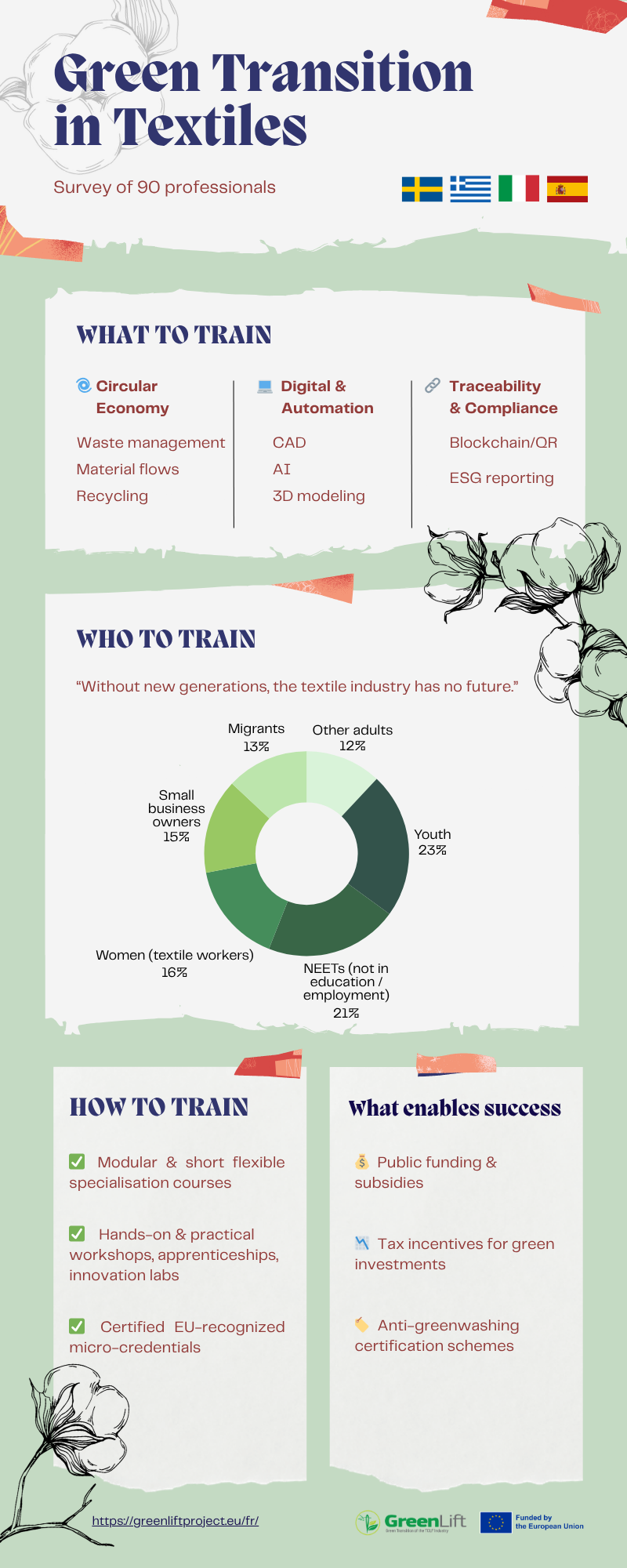
In the context of the green transition, digital skills go beyond the basic use of technological tools. They include the ability to use design and simulation software, interpret data related to environmental impact, and understand digital management and traceability systems. These skills combine technical knowledge with a sustainability-oriented view of the production process and are particularly relevant in a sector characterised by complex value chains and increasing environmental requirements and regulations.
Despite advances in digitalisation, many companies in the TCLF sector continue to face difficulties in recruiting profiles with both digital skills and sustainability expertise. This skills gap is partly due to the lack of specialised training and the mismatch between the real needs of industry and existing educational programmes. As a result, the adoption of more sustainable practices is limited not by the absence of technological solutions, but by the lack of skilled people able to implement them.
Closing this gap requires strengthening education and lifelong learning. The continuous improvement and updating of skills enable students and professionals to adapt to changes in the sector and to make use of the potential of digitalisation to move towards more sustainable production models. In this process, collaboration between educational institutions, industry and other actors within the textile ecosystem is essential to develop training programmes aligned with current and future challenges.
The transition towards a more sustainable TCLF industry cannot be achieved through technology alone. Digitalisation must be accompanied by the development of appropriate digital skills that allow sustainability strategies to be effectively implemented. Investing in education and skills development is key to building a greener, more competitive and future-ready textile industry.