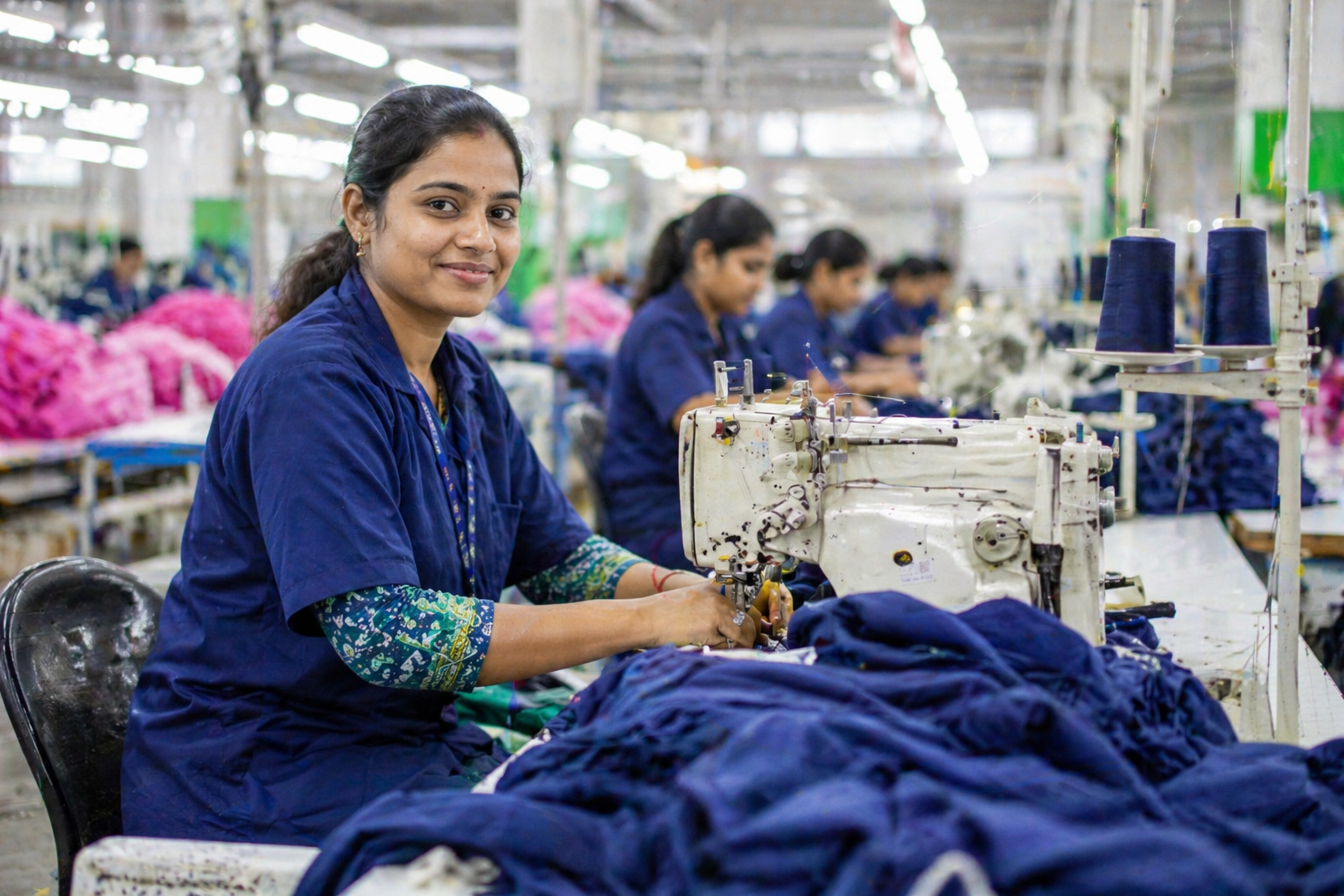
In the textile and apparel sector, women make up the majority of the workforce: in Vietnam, for example, they account for nearly 75% of employees, making a decisive contribution to the industry’s growth [1]. Yet, despite this overwhelming presence, most of them remain concentrated in low-skilled jobs, with low wages and limited opportunities for advancement. Female workers are often excluded from continuing education opportunities and underrepresented in technical and managerial roles [1]. It is this reality that inspired the GreenLift Project, which identifies green upskilling as the key tool to reverse this trend.
Green Upskilling: What It Is and Why It Matters
Green upskilling is the process of acquiring skills related to environmental sustainability — management of recycled fibers, energy efficiency, waste reduction, digital traceability of the supply chain — applied to the existing workplace [2]. It does not replace women’s work in the textile industry: it transforms it, opening access to more skilled and better-paid technical roles. For women workers in the sector, this means transitioning from production line workers to specialised professionals capable of driving the ecological transition from within the factories [2].
Training as a Driver of Change
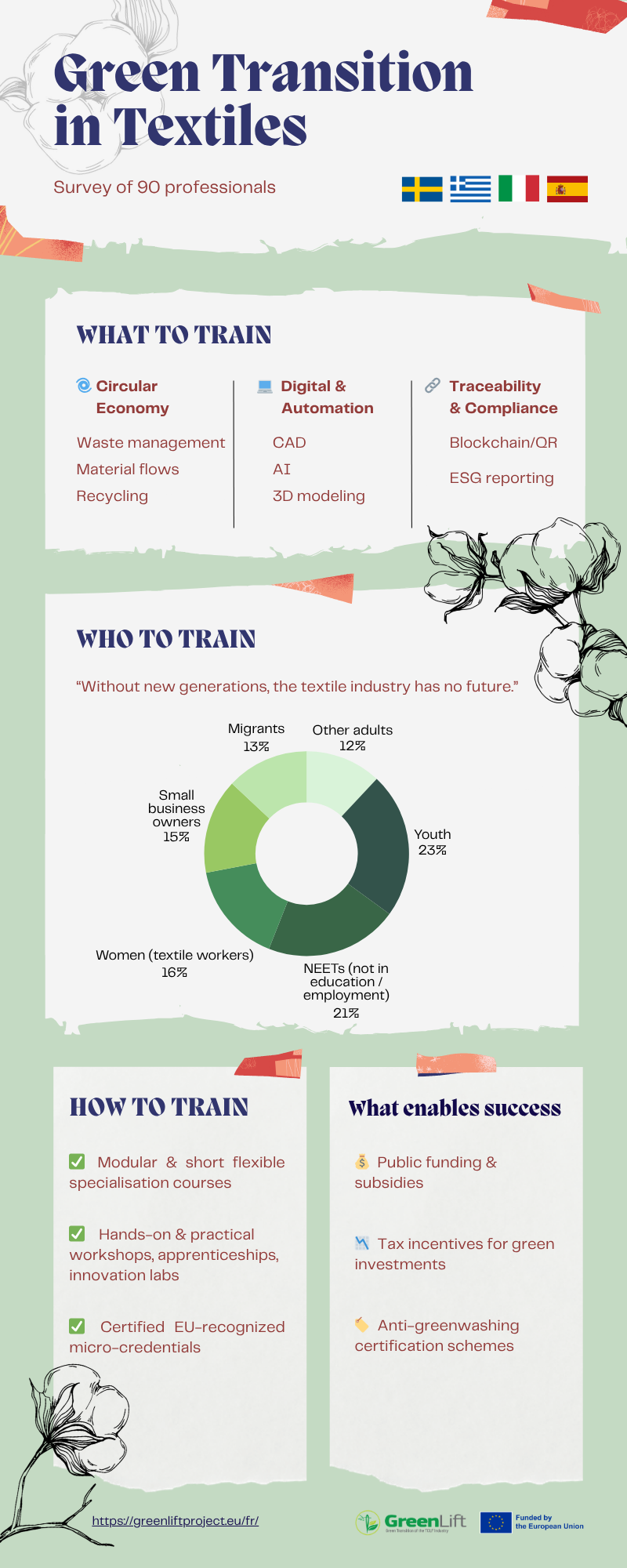
The GreenLift Project invests in targeted training programs: sustainable materials management, the use of digital technologies for supply chain traceability, and efficiency in production processes [2, 6]. The results of similar programs confirm the effectiveness of this approach. The GEAR (Gender Equality and Returns) program, developed by the IFC and implemented in Vietnam, equipped female textile workers with the skills needed to take on supervisory roles: over a two-year period, 80% of participating factories reported increased productivity on production lines led by the trained women¹. Similar data emerge from other contexts: green training reduces turnover, increases retention, and improves workers’ contractual conditions [3, 4].
Sustainability and Inclusive Growth in the Textile Industry
Sustainable fashion is not just about materials or environmental certifications: it is about the people who produce those garments. Equipping female textile workers with sustainability skills means transforming the entire production chain, not just the final product [4]. Companies that invest in women’s empowerment see tangible improvements in quality, process innovation, and reduced environmental impact [5, 7]. Inclusion, in this sense, is not an additional cost: it is an integral part of a credible sustainability strategy.
Toward a Circular and Just Future
The GreenLift Project recognises that women’s empowerment and the ecological transition in the textile industry are inseparable goals. Promoting green upskilling means investing in a sector where sustainability is also a social issue: cleaner factories, more skilled workers, and more transparent supply chains [6]. Supporting women’s talent through sustainability training is the decisive step toward transforming the textile industry’s ecological challenges into real opportunities for professional and social advancement.
Links:
¹ ILO – Empowering women in Viet Nam’s textile and garment industry
² Textile Network – Empowering women in the garment sector
³ Emerald Publishing – Stories of work, well-being and inclusive
⁴ HSWS – Research on sustainable textile and women’s empowerment
⁵ Ministero del Lavoro – Empowering Women at Work
⁶ Forbes – Behind the Seams: Empowering Women Through Sustainable Fashion
⁷ Abiteks – Empowering Women in the Textile Industry