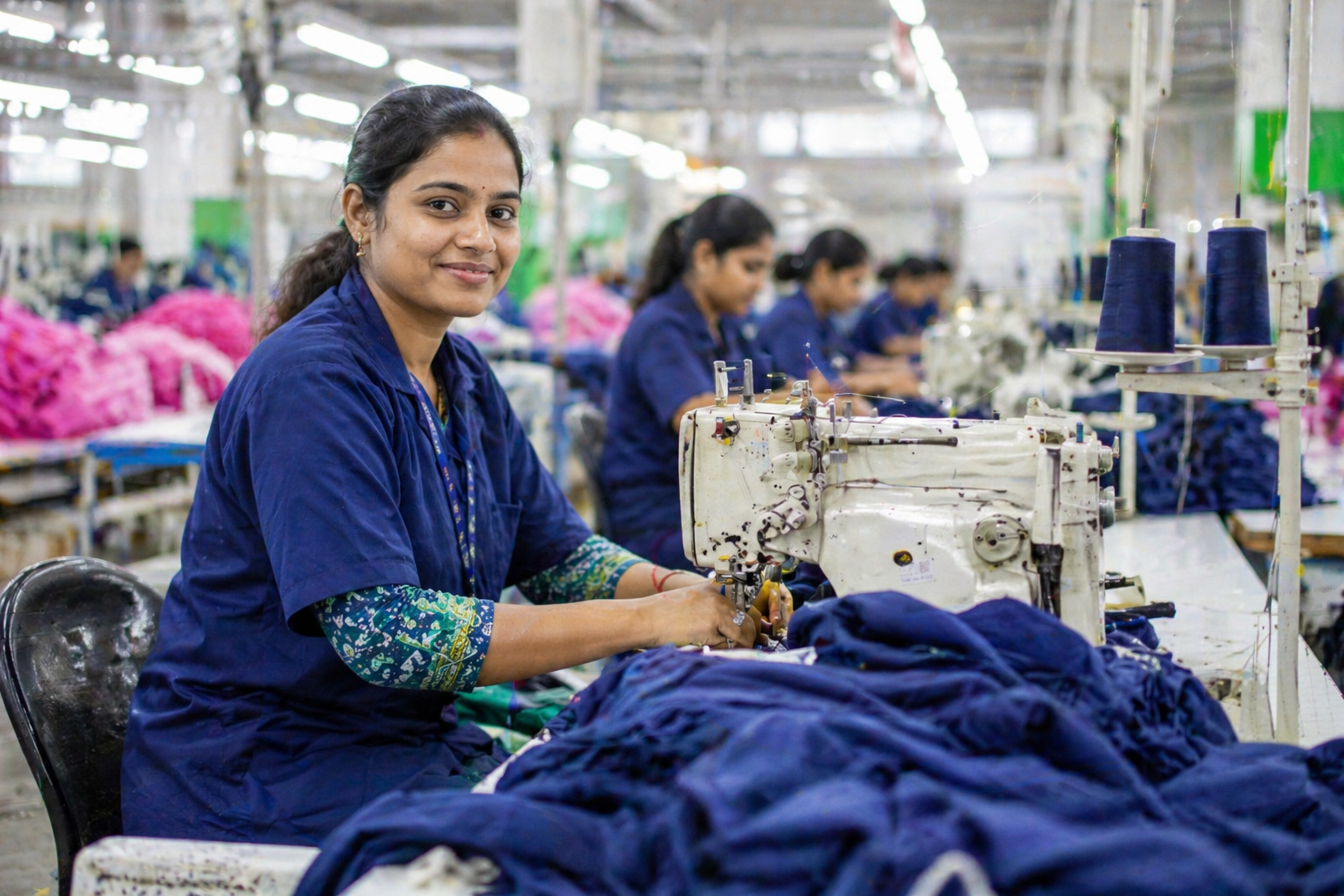
Nel settore tessile e dell’abbigliamento, le donne costituiscono la maggioranza della forza lavoro: in Vietnam, ad esempio, rappresentano quasi il 75% dei dipendenti, dando un contributo decisivo alla crescita del settore [1]. Tuttavia, nonostante questa presenza schiacciante, la maggior parte di loro rimane concentrata in lavori poco qualificati, con salari bassi e opportunità di avanzamento limitate. Le lavoratrici sono spesso escluse dalle opportunità di formazione continua e sottorappresentate nei ruoli tecnici e dirigenziali [1]. È proprio questa realtà che ha ispirato il progetto GreenLift, il quale identifica la riqualificazione professionale in ambito ambientale come lo strumento chiave per invertire questa tendenza.
Miglioramento delle competenze in ambito ambientale: che cos’è e perché è importante
Il miglioramento delle competenze in ambito ambientale è il processo di acquisizione di competenze relative alla sostenibilità ambientale — gestione delle fibre riciclate, efficienza energetica, riduzione dei rifiuti, tracciabilità digitale della catena di approvvigionamento — applicate al contesto lavorativo esistente [2]. Non sostituisce il lavoro delle donne nell’industria tessile: lo trasforma, aprendo l’accesso a ruoli tecnici più qualificati e meglio retribuiti. Per le lavoratrici del settore, ciò significa passare da operatrici della linea di produzione a professioniste specializzate in grado di guidare la transizione ecologica dall’interno delle fabbriche [2].
Formazione come motore del cambiamento
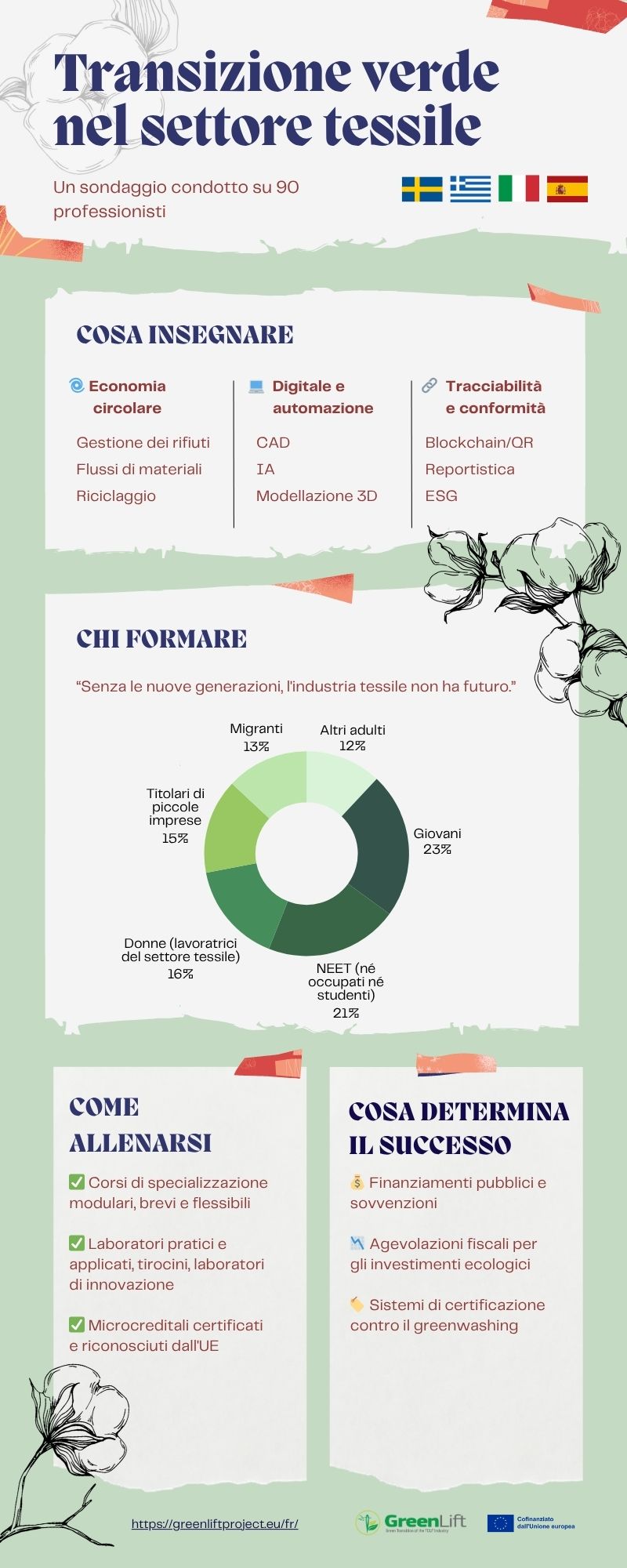
Il progetto GreenLift investe in programmi di formazione mirati: gestione sostenibile dei materiali, utilizzo delle tecnologie digitali per la tracciabilità della catena di approvvigionamento ed efficienza nei processi produttivi [2, 6]. I risultati di programmi simili confermano l’efficacia di questo approccio. Il programma GEAR (Gender Equality and Returns), sviluppato dall’IFC e attuato in Vietnam, ha fornito alle lavoratrici del settore tessile le competenze necessarie per assumere ruoli di supervisione: in un periodo di due anni, l’80% delle fabbriche partecipanti ha segnalato un aumento della produttività sulle linee di produzione guidate dalle donne formate¹. Dati simili emergono da altri contesti: la formazione verde riduce il turnover, aumenta la fidelizzazione e migliora le [3, 4].
Sostenibilità e crescita inclusiva nell’industria tessile
La moda sostenibile non riguarda solo i materiali o le certificazioni ambientali: riguarda le persone che producono quei capi. Fornire alle lavoratrici del settore tessile competenze in materia di sostenibilità significa trasformare l’intera catena di produzione, non solo il prodotto finale [4]. Le aziende che investono nell’emancipazione delle donne registrano miglioramenti tangibili in termini di qualità, innovazione dei processi e riduzione dell’impatto ambientale [5, 7]. L’inclusione, in questo senso, non è un costo aggiuntivo: è parte integrante di una strategia di sostenibilità credibile.
Verso un futuro circolare e giusto
Il progetto GreenLift riconosce che l’emancipazione delle donne e l’e La transizione ecologica nell’industria tessile rappresenta un obiettivo imprescindibile. Promuovere l’aggiornamento professionale in materia di sostenibilità significa investire in un settore in cui la sostenibilità è anche una questione sociale: stabilimenti più puliti, lavoratori più qualificati e catene di approvvigionamento più trasparenti [6]. Sostenere il talento delle donne attraverso la formazione in materia di sostenibilità è il passo decisivo per trasformare le sfide ecologiche dell’industria tessile in vere e proprie opportunità di avanzamento professionale e sociale.
Link
¹ ILO – Empowering women in Viet Nam’s textile and garment industry
² Textile Network – Empowering women in the garment sector
³ Emerald Publishing – Stories of work, well-being and inclusive
⁴ HSWS – Research on sustainable textile and women’s empowerment
⁵ Ministero del Lavoro – Empowering Women at Work
⁶ Forbes – Behind the Seams: Empowering Women Through Sustainable Fashion
⁷ Abiteks – Empowering Women in the Textile Industry