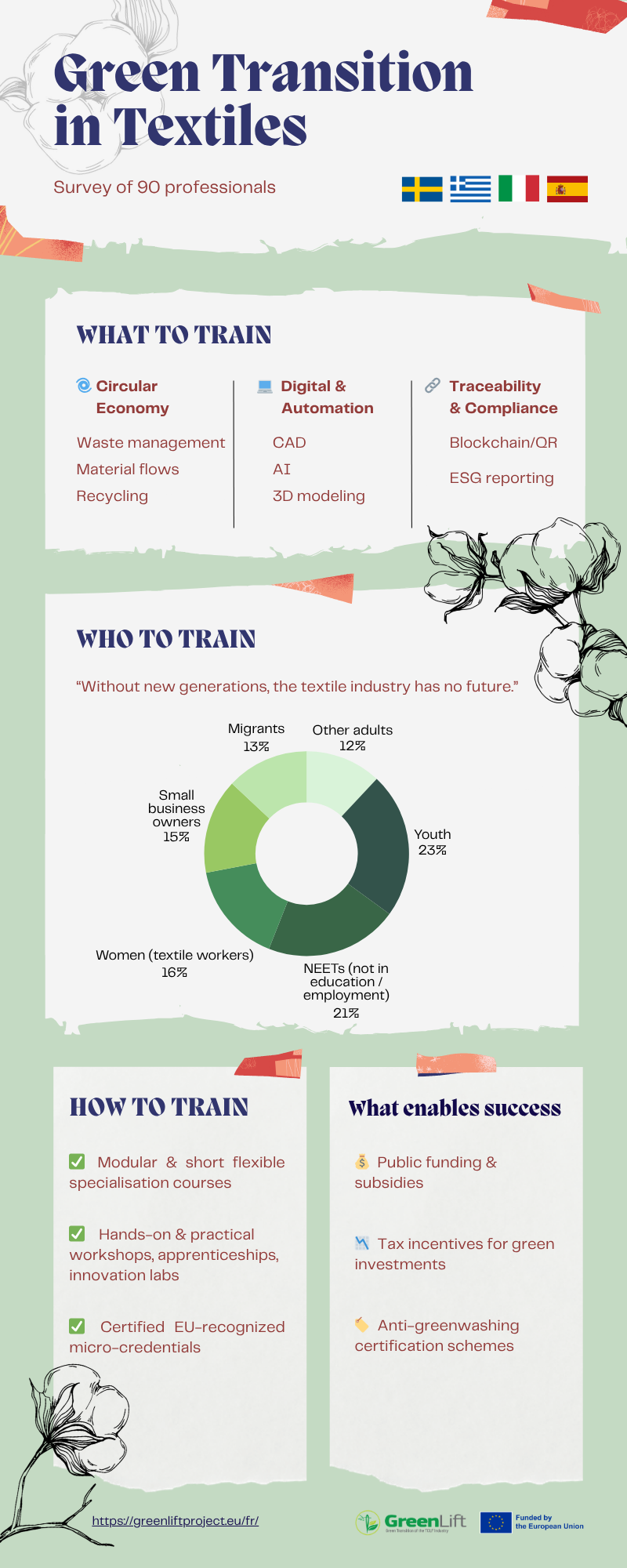
The transition towards a more sustainable textile sector is not only an environmental challenge, but also a social opportunity. As Europe moves towards circular and low-impact production models, the need for green skills is growing rapidly, opening new pathways for inclusion and empowerment within the workforce.
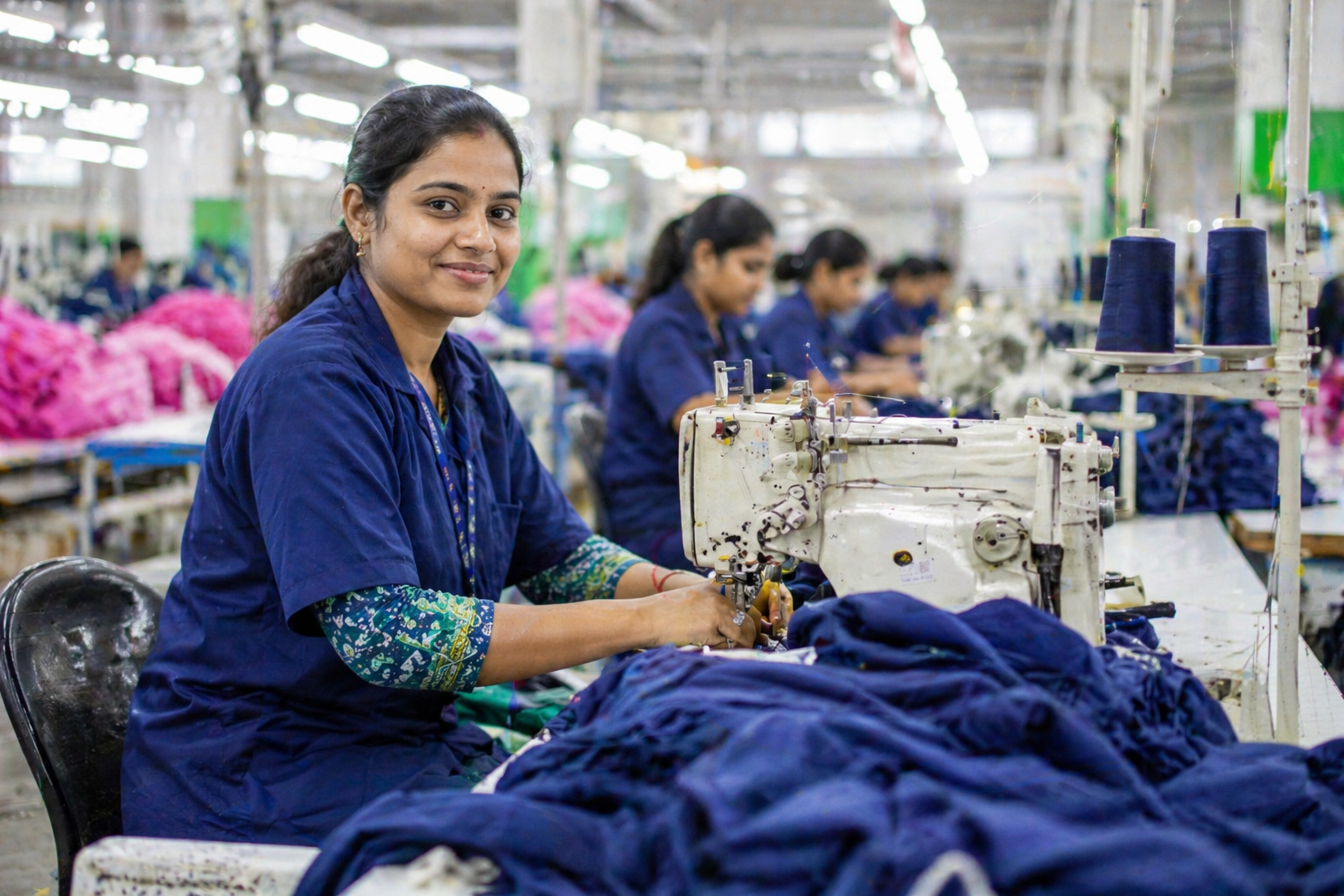
Women already represent a significant share of employment in the textile, clothing, leather and footwear (TCLF) sector. However, they are often concentrated in lower-skilled roles, with fewer opportunities to access training or advance professionally. At the same time, European initiatives highlight that the transition to sustainability will require workers to develop competences in areas such as circular economy, eco-design, resource efficiency, and digital tools.
Despite this growing demand, many workers still lack access to relevant training opportunities. This skills gap risks slowing down the sector’s green transition while reinforcing existing inequalities. Supporting women through targeted upskilling and reskilling pathways is therefore essential, not only to improve employability, but also to ensure that the transformation of the sector is inclusive and fair.
Investing in green skills can enable women to move into higher-value roles, actively contribute to innovation, and participate in shaping a more sustainable industry. Across Europe, policies and initiatives increasingly recognise that combining skills development with social inclusion is key to achieving long-term impact.
In this context, projects like GreenLift contribute to bridging this gap by promoting accessible training opportunities and supporting women and other vulnerable groups in developing the competences needed for the jobs of the future. Strengthening green skills is not only about adapting to change, it is about ensuring that no one is left behind in the transition.