Le secteur du textile, de l’habillement, du cuir et de la chaussure (TCLF) se trouve à un tournant décisif. Alors que les préoccupations environnementales, la pression réglementaire et l’évolution des attentes des consommateurs redéfinissent le secteur, les entreprises sont amenées à repenser non seulement leurs modes de production, mais aussi la manière dont elles préparent leur main-d’œuvre pour l’avenir. Dans ce contexte, les compétences numériques s’imposent comme un moteur essentiel de la transition écologique, permettant des pratiques industrielles plus durables, plus efficaces et plus résilientes.
La transformation numérique et le développement durable sont souvent considérés comme des défis distincts. Or, au sein de l’écosystème TCLF, ils sont étroitement liés. Les outils numériques, tels que les systèmes de production intelligents, la prise de décision fondée sur les données, la conception numérique et les plateformes de traçabilité, peuvent réduire considérablement le gaspillage de matières premières, optimiser la consommation d’énergie et améliorer la transparence tout au long de la chaîne de valeur. Sans une main-d’œuvre capable d’utiliser efficacement ces outils, les avantages environnementaux potentiels de la numérisation restent largement inexploités.
Combler le déficit de compétences dans l’écosystème textile
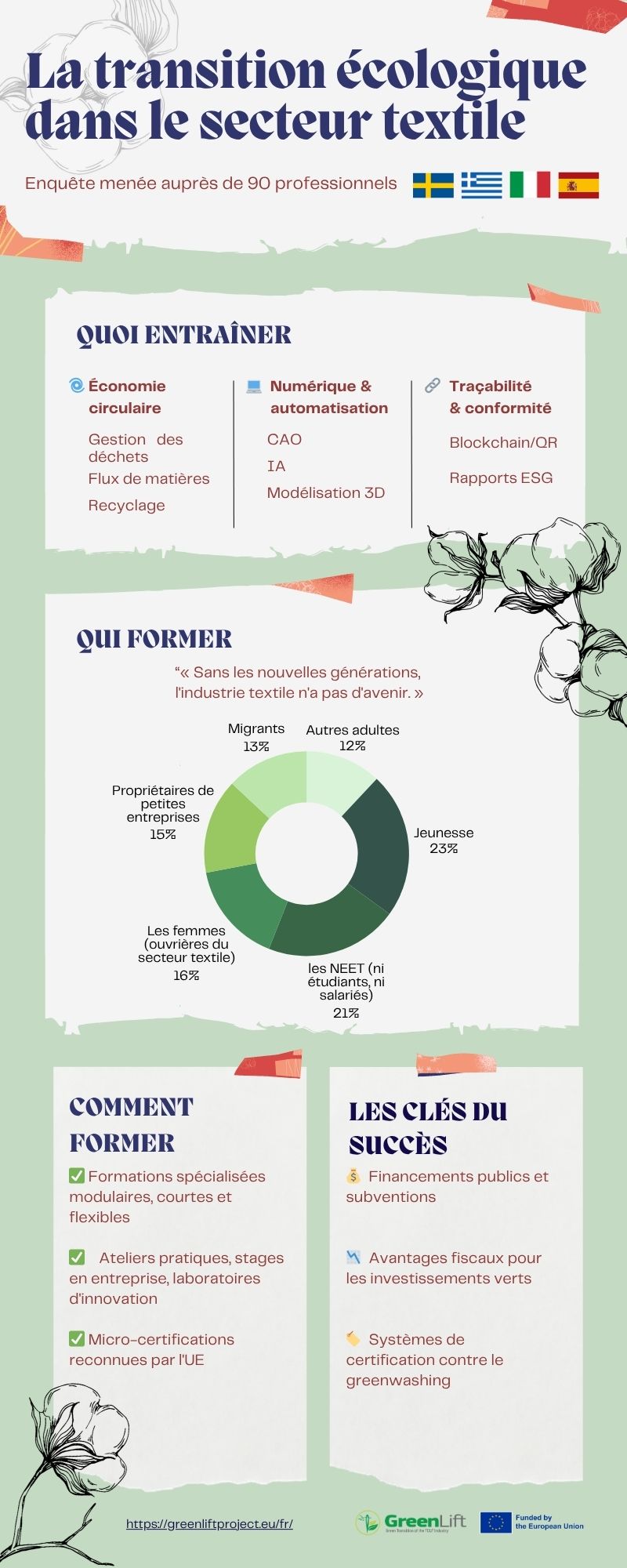
Malgré la disponibilité croissante des technologies numériques, un déficit de compétences considérable persiste au sein du secteur TCLF. De nombreux travailleurs, en particulier dans les petites et moyennes entreprises, n’ont pas accès à des formations combinant compétences numériques et connaissances en matière de développement durable. Parallèlement, les groupes vulnérables tels que les femmes, les NEET (jeunes ni en études, ni en emploi, ni en formation) et les personnes en reconversion professionnelle se heurtent à des obstacles supplémentaires pour entrer ou rester sur le marché du travail.
Cette inadéquation des compétences représente un risque non seulement pour l’employabilité individuelle, mais aussi pour la capacité du secteur à s’adapter à des modèles de production plus écologiques et aux principes de l’économie circulaire. Combler ce fossé nécessite des approches de formation ciblées, inclusives et axées sur la pratique, qui reflètent les besoins réels de l’industrie.
Des compétences numériques pour un impact durable
Le projet GreenLift répond à ce défi en plaçant les compétences numériques au cœur du développement d’une main-d’œuvre axée sur le développement durable. Financé dans le cadre du programme Erasmus+, GreenLift vise à soutenir la transition verte et numérique du secteur TCLF en dotant les personnes des compétences nécessaires pour faire face au changement.
Grâce à une méthodologie structurée et holistique, GreenLift associe l’apprentissage numérique aux principes de développement durable et à l’expérience pratique. Le projet identifie les déficits de compétences existants, élabore des contenus de formation sur mesure et dispense cet apprentissage à la fois via des outils en ligne et dans les « GreenLift Labs » – des environnements pratiques où les participants peuvent appliquer des solutions numériques à des défis concrets en matière de développement durable dans la production textile.
Au-delà des compétences techniques, GreenLift met également fortement l’accent sur l’employabilité, l’inclusion et la résilience. En proposant du mentorat, des conseils et des services d’accompagnement, le projet aide les participants à renforcer leur confiance en eux et leur capacité d’adaptation, garantissant ainsi que le renforcement des compétences numériques se traduise par des opportunités de carrière concrètes.
Vers une industrie plus verte et plus résiliente
Alors que le secteur TCLF poursuit sa transition vers des modèles plus verts et plus circulaires, investir dans les compétences numériques n’est plus une option, mais une nécessité stratégique. Les compétences numériques permettent aux entreprises d’innover de manière responsable, de se conformer aux normes environnementales et de rester compétitives sur un marché en constante évolution.
En faisant le lien entre les compétences numériques et écologiques, des initiatives telles que GreenLift contribuent au développement d’un écosystème textile plus durable, plus inclusif et prêt pour l’avenir. Donner aux personnes les compétences adéquates aujourd’hui pose les bases d’une industrie plus verte demain.