The textile, clothing, leather and footwear (TCLF) industries in Europe are
undergoing significant transformation driven by sustainability objectives,
digitalisation, changing workforce demographics, and emerging EU regulations. To
remain competitive and resilient, the sector requires not only technological
innovation but also a workforce equipped with new knowledge and skills. In this
context, lifelong learning has become a key mechanism for supporting the green
transition.
Adult education plays a particularly important role because many workers currently
employed in the sector must adapt to evolving production methods, materials, and
sustainability standards. Traditional manufacturing practices are increasingly being
complemented or replaced by circular and digital approaches that require continuous
upskilling and reskilling. Lifelong learning enables adults to acquire the competences
needed to navigate these changes while remaining active in the labor market.
Additionally, lifelong learning helps close the growing skills gap between traditional
production methods and emerging green technologies.
Across Europe, priority skills for the green transition include circular economy
competences, eco-design, digital product passports, and a range of transversal skills
such as problem-solving, collaboration and critical thinking. These competences are
becoming essential as companies adopt circular business models focused on
reducing waste, extending product lifecycles, promoting repair and reuse, and
improving textile recycling processes. Furthermore, new regulations such as the EU
Ecodesign for Sustainable Products Regulation require enhanced traceability and
transparency throughout supply chains, creating a demand for workers who can
use digital tools and sustainability data effectively.
Lifelong learning also helps close the growing skills gap between traditional
production methods and emerging green technologies. Through flexible and
accessible training opportunities, adults can develop the digital and sustainability-
related competences needed to support innovation and regulatory compliance. At
the same time, education empowers consumers and professionals alike to make
informed decisions, identify greenwashing practices, encourage critical thinking, and
promote more sustainable consumption patterns.
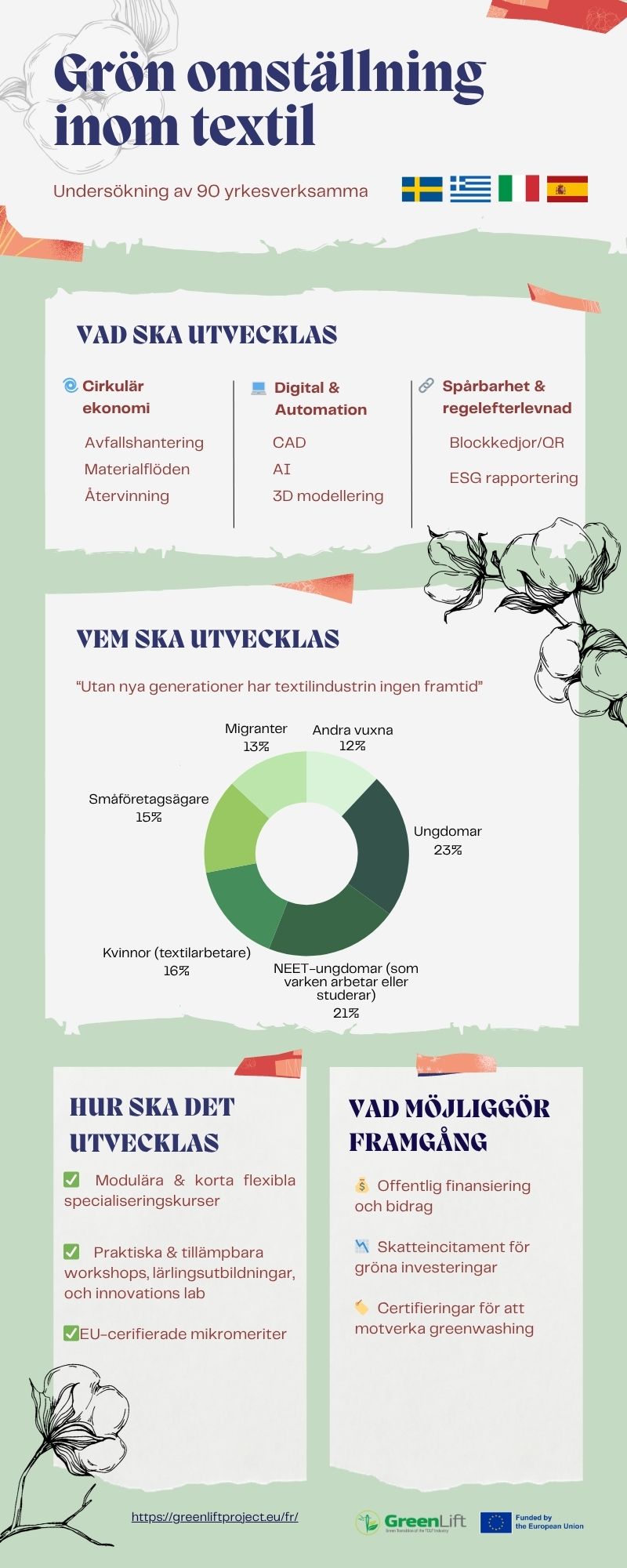
At GreenLift project, we focus on short flexible courses covering technical and social
skills through the GreenLift Curriculum, workplace-focused learning, individual and
career development plans, interactive learning platforms, soft skills development and
coaching programs, to insure the practical application and benefits of re- and
upskilling in TCLF sector in EU.
For the TCLF sector, lifelong learning is therefore not simply an educational objective
but a strategic necessity. Agile and inclusive adult education systems can help ensure that workers, managers and entrepreneurs are prepared for the challenges and opportunities of the green transition, supporting both environmental sustainability and the long-term competitiveness of the European textile industry.